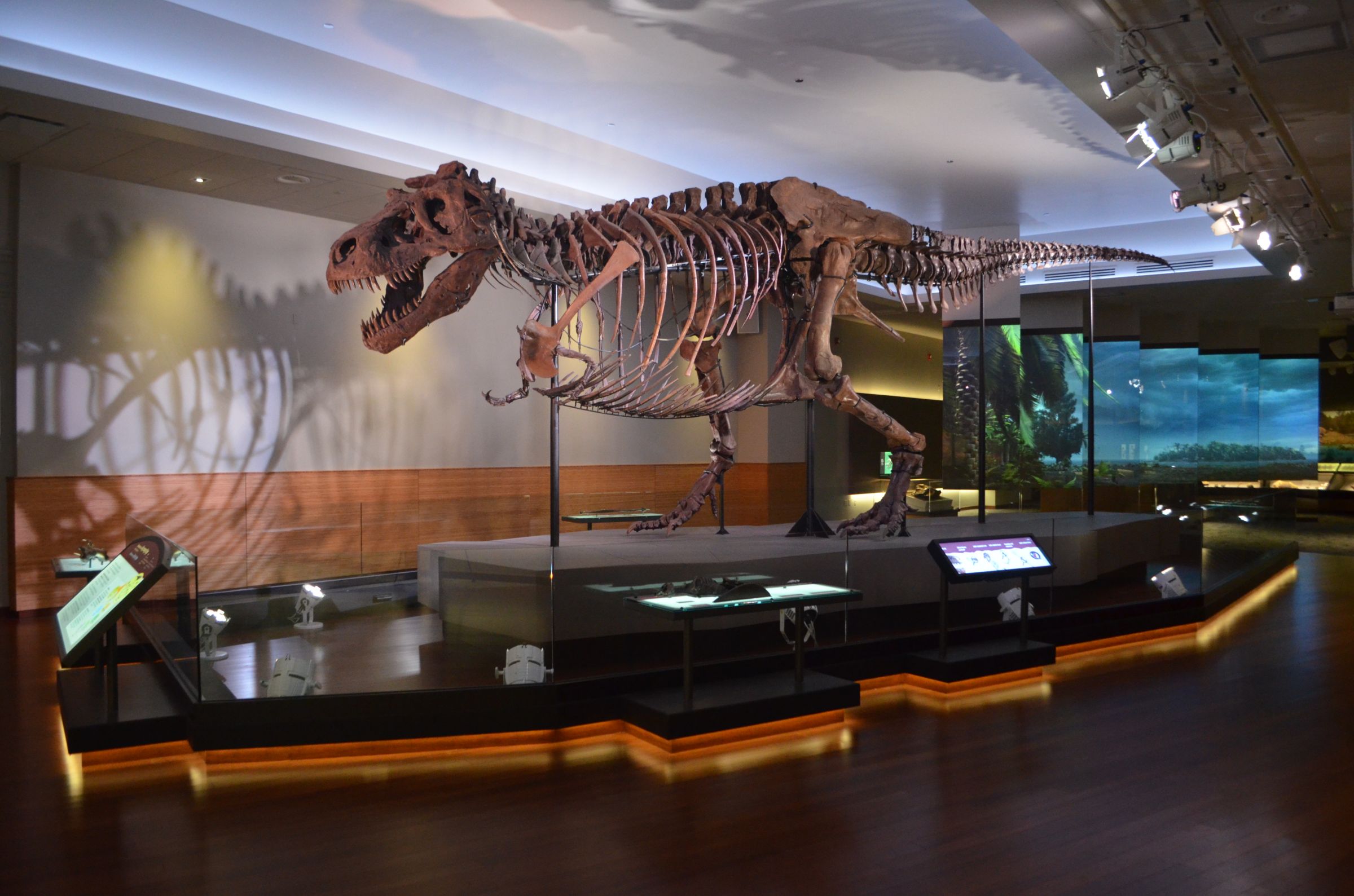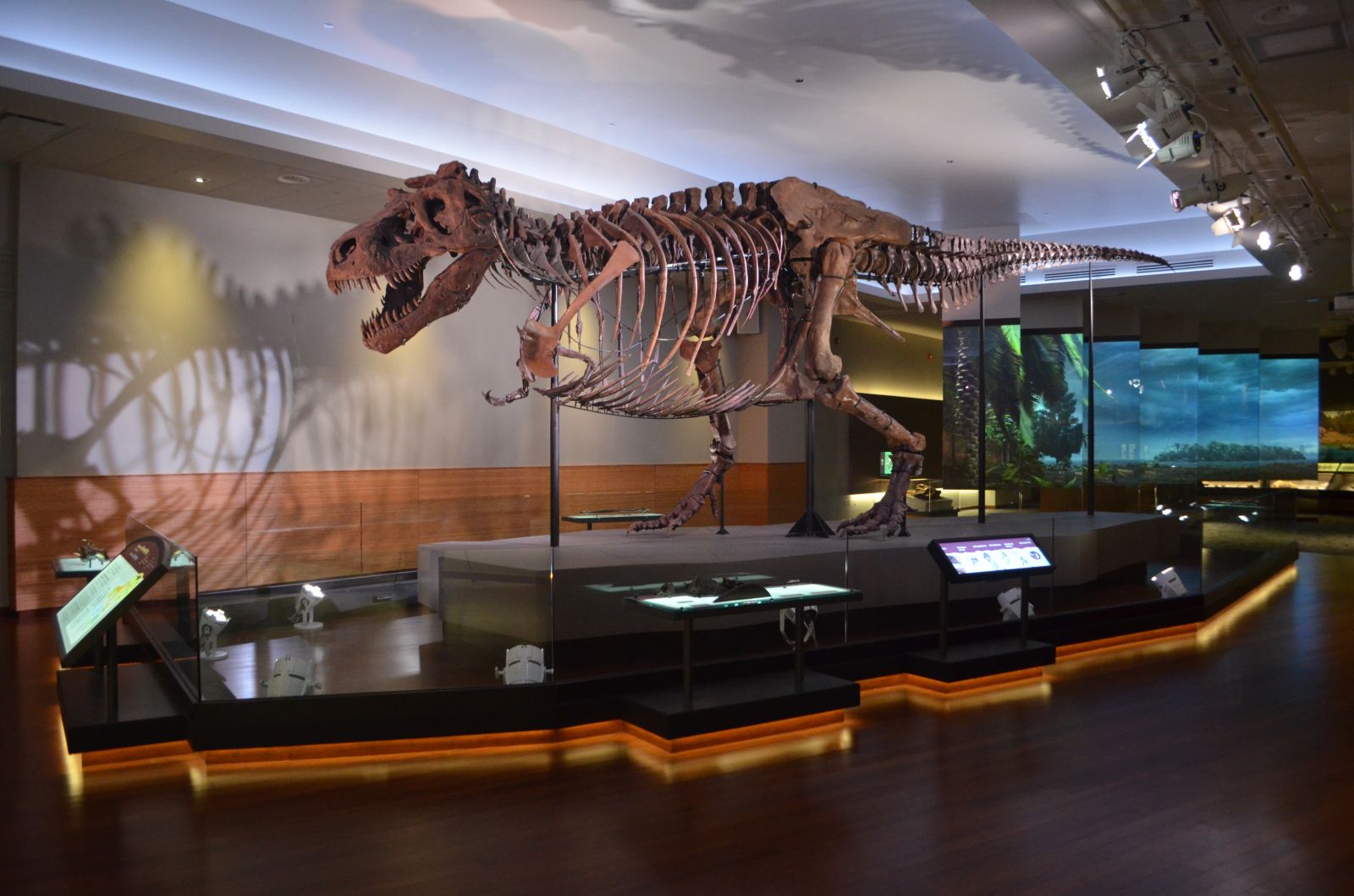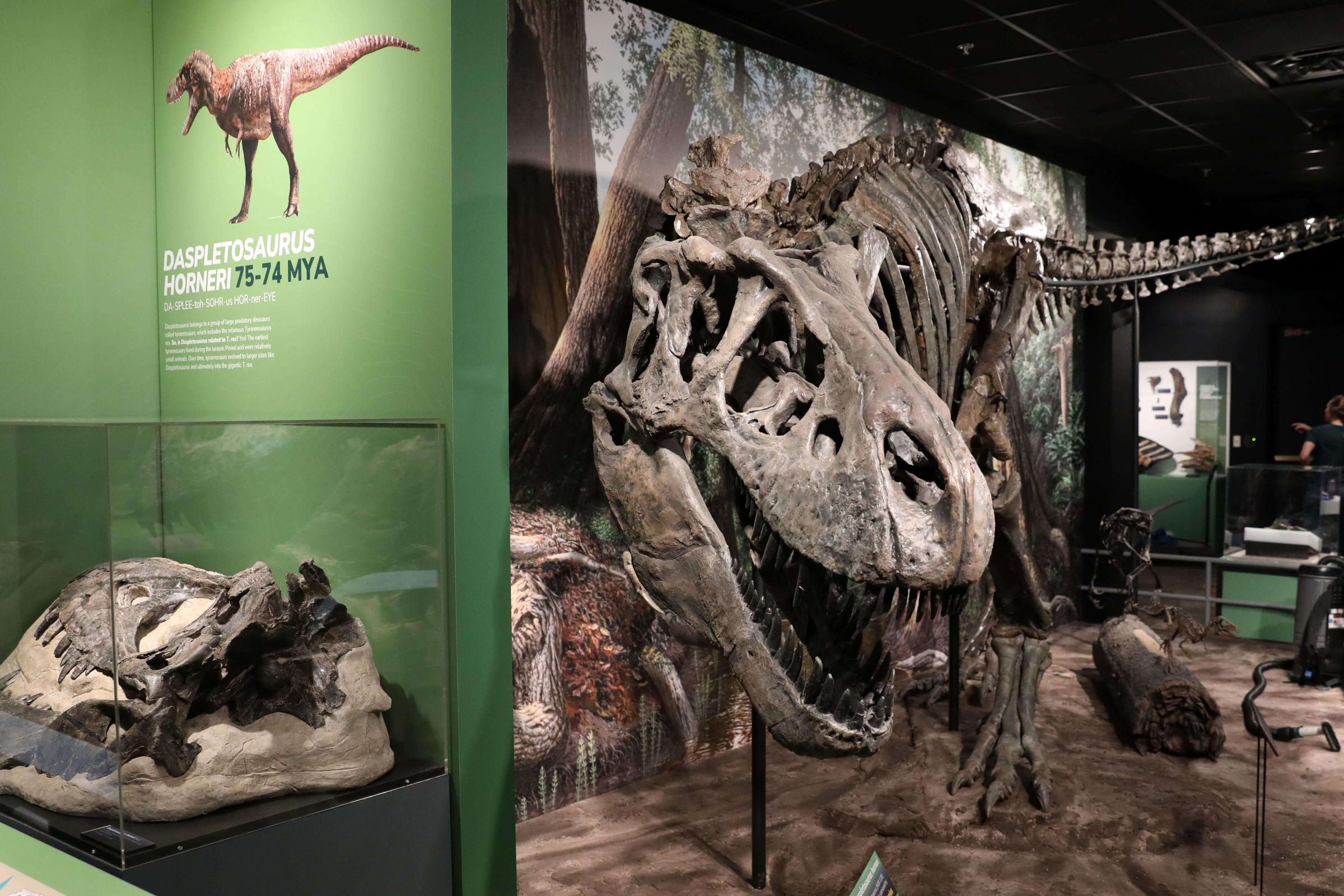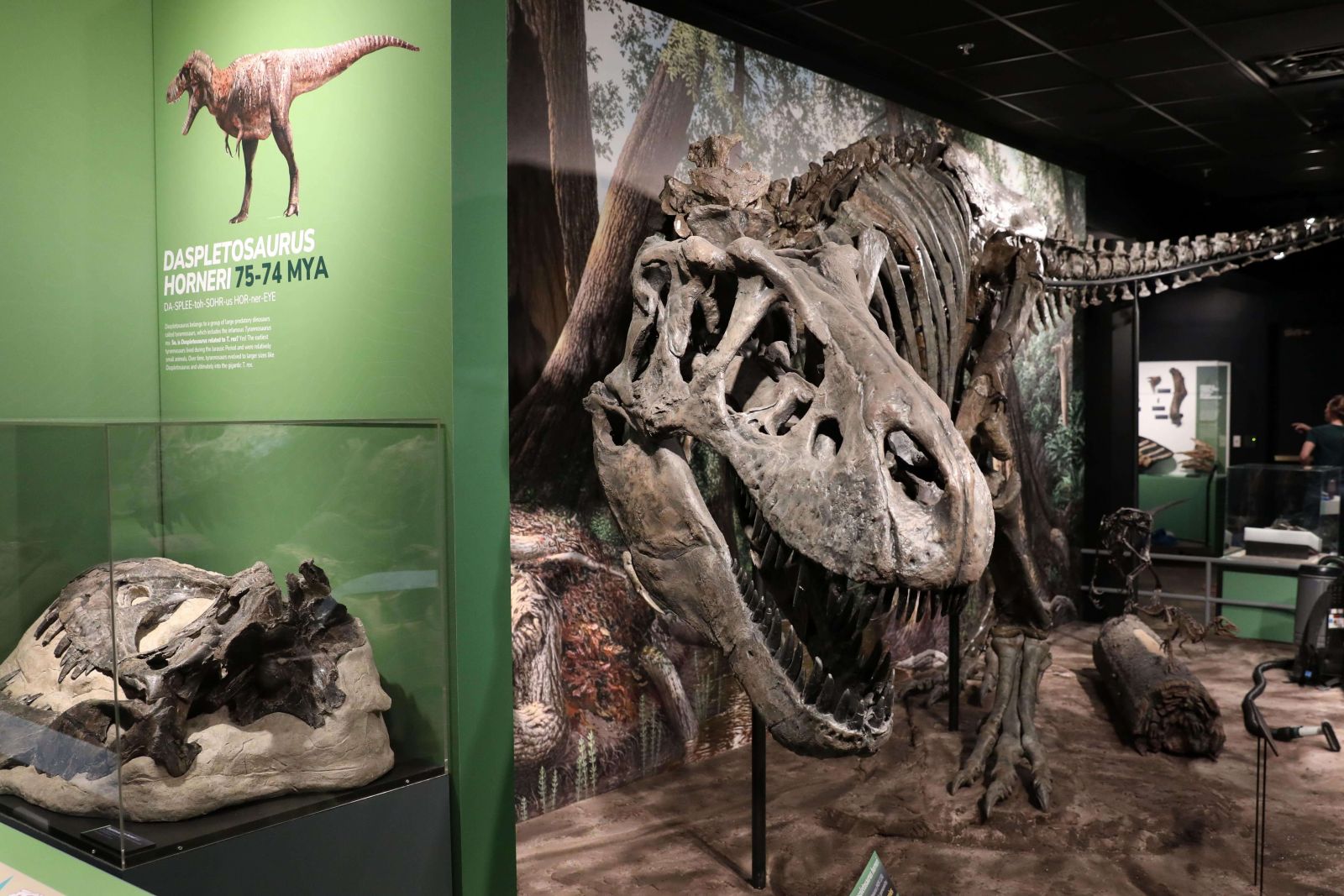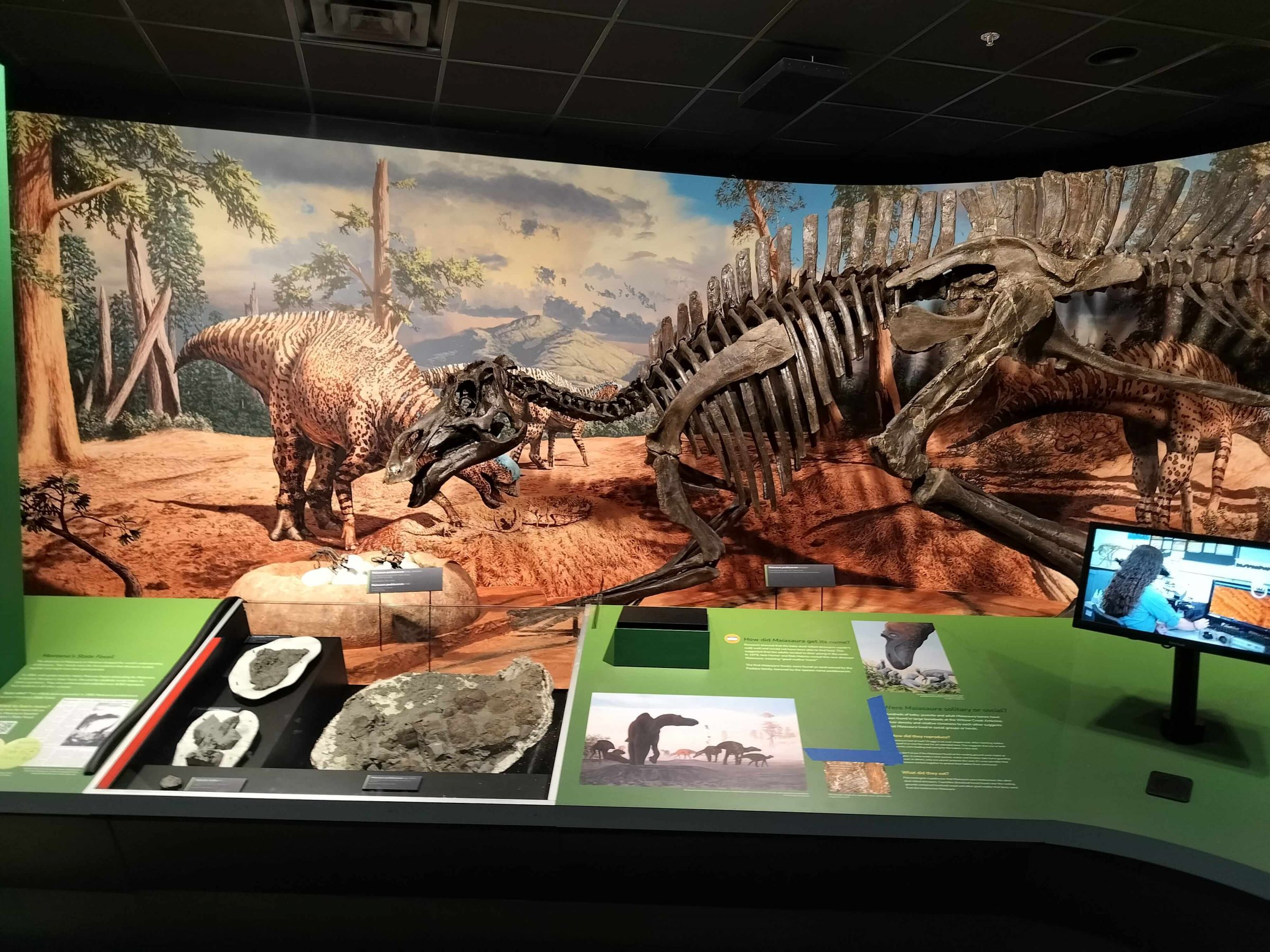
Working in close collaboration with Bluewater Studio and directly with the Museum of the Rockies, Morlights developed a lighting strategy rooted in restraint, precision and story.
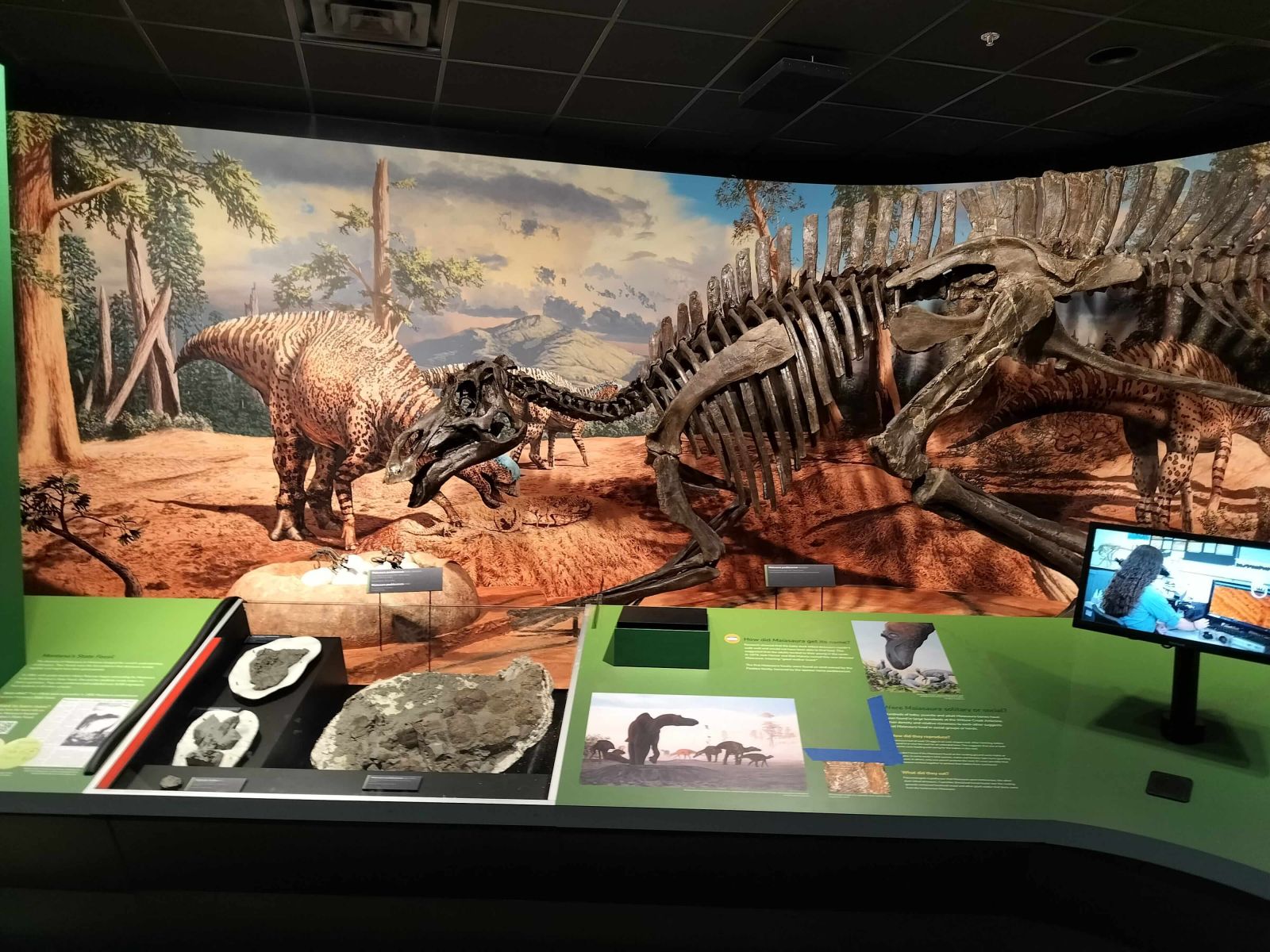
Working in close collaboration with Bluewater Studio and directly with the Museum of the Rockies, Morlights developed a lighting strategy rooted in restraint, precision and story.
Cretaceous Crossroads Exhibit @ Museum of the Rockies
Opened July 2025
Exhibit Designer & Fabricator: Bluewater Studio
The Museum of the Rockies is home to one of the largest collections of North American dinosaurs in the world. For the first time in over a decade, the museum unveiled a new primary paleontology exhibition: Cretaceous Crossroads.
The 2,400 sf exhibit takes visitors through a pivotal chapter of Montana's ancient past, spanning three geologic formations across 80 million years of prehistory. Specimens include a 30-foot Daspletosaurus horneri, a Maiasaura tending her nest, a 23-foot Mosasaurus, and never-before-seen fossils new not just to the museum but to science itself.
Morlights was engaged by exhibit designer and fabricator Bluewater Studio to develop the lighting design for the full exhibit. The project demanded a disciplined, design-led response with a limited budget, and demonstrated that thoughtful decisions made early in partnership with the client. The project was featured in the October/November 2025 issue of Designing Lighting magazine.
Creative + Technical: The Morlights Approach
Working in close collaboration with Bluewater Studio and directly with the Museum of the Rockies, Morlights developed a lighting strategy rooted in restraint, precision and story.
Creative Strategy: Lighting as Narrative
Knowing What to Light
The first step in Morlights' approach to every artifact is identifying what is significant about it, and making sure that is exactly what the visitor sees.
This is where it gets fun with different forms of fossils. For the Mosasaurus, it was the teeth. For a nesting Maiasaura, it was the eggs. For one particularly delicate artifact whose slender bones blended entirely into the background before aiming, the solution was side-lighting to create dimensionality and separation from the surface behind it. In each case, the story came first and the technique followed.
The Underwater Zone
The exhibit's most immersive sequence surrounds the Mosasaurus in an environment designed by Bluewater to evoke the Western Interior Sea. Morlights translated that design intent into a fully realized atmospheric shift: the entire area was bathed in blue, with effects units creating the sensation of water movement and varying tones of blue applied through gels and dimming to establish depth and differentiation. Artifacts within the zone were lit selectively with some in white and some in blue at a reduced intensity to layer the specimens into the environment.
Interactive and AV Zones
Cretaceous Crossroads includes a timeline interactive as a wall-mounted interface allowing visitors to scroll across deep time, alongside augmented reality elements. For these zones, light was kept away from projection surfaces. Rather than introducing ambient light that would wash the projection, Morlights made the user interface itself very bright to draw visitors in with the luminance of the interactive element while protecting the projection surface behind it from direct illumination.
Technical Strategy: Precision Within Constraints
Fixture Strategy
The museum had an existing building standard:Contech track, established through a prior project. Morlights honored that standard for the track itself but identified the track heads from that prior project as insufficient for this application. The proposed modification was straightforward: retain the Contech track, replace the heads with a less expensive alternative, and specify a high-quality Soraa lamp with snap-on optical attachments offering 17°, 25°, 36° and 60° beam distributions.
The result was a system that cost less than the museum's existing standard while delivering meaningfully better light output and optical control. The museum paid less and received more.
Critically, the Soraa lamp was not a compromise. Morlights had deployed the same lamp on prior museum projects including work at the Swedish American Museum in Chicago, and brought that institutional knowledge directly to bear here. The color rendering highlights blues the same blue as daylight, greens the same green. The final system comprised 200 linear feet of track and 51 track heads across 2,400 sf.
Controls
There is no lighting control system in Cretaceous Crossroads. The exhibit operates on contactors with the entire panel switching on and off together. This was a deliberate recommendation.
The Museum of the Rockies is a small institution with a lean staff and no dedicated lighting technician. A programmed control system would have required a programmer to travel to Montana for commissioning and ongoing support, introduced maintenance complexity the team was not equipped to manage, and added cost without adding operational value. The contactors are reliable, intuitive and appropriate for the institution as it actually operates.
Conservation
Morlights' standard practice is to ask specific conservation questions at the outset of every museum project, document the answers on the plans, and design within the constraints established by the conservationists. No two conservationists give the same answer, and that variability makes documentation essential. On this project, strict illumination limits were not imposed, which allowed the team to work with greater flexibility.
Design Outcomes
Conclusion
When Designing Lighting asked Morlights to contribute to their museum edition, the pitch was simple: this is not the most expensive or elaborate project you will feature this year, and that is exactly why it matters more.
Cretaceous Crossroads represents the reality of museum lighting design for most institutions: constrained budgets, small staff, sensitive objects and visitors eager to see them. What made this project succeed was collaboration with a client who answered honestly, a fabricator who trusted the process, and a design team that knew where to put the light.