
The most complex challenge was the presentation space, which needed to shift between formal client presentations and everyday operations while keeping Musco's signature technology at the center of the story.
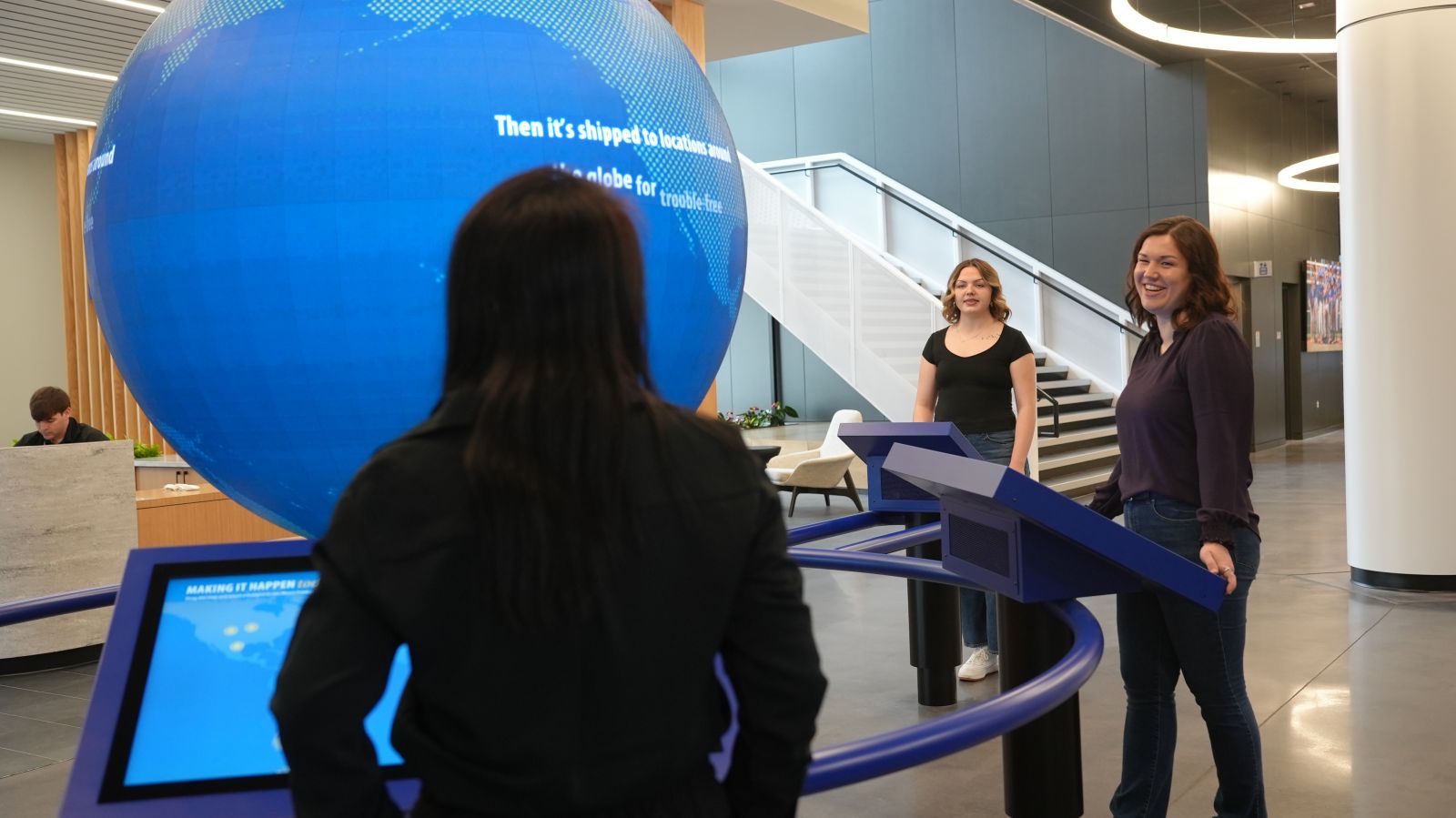
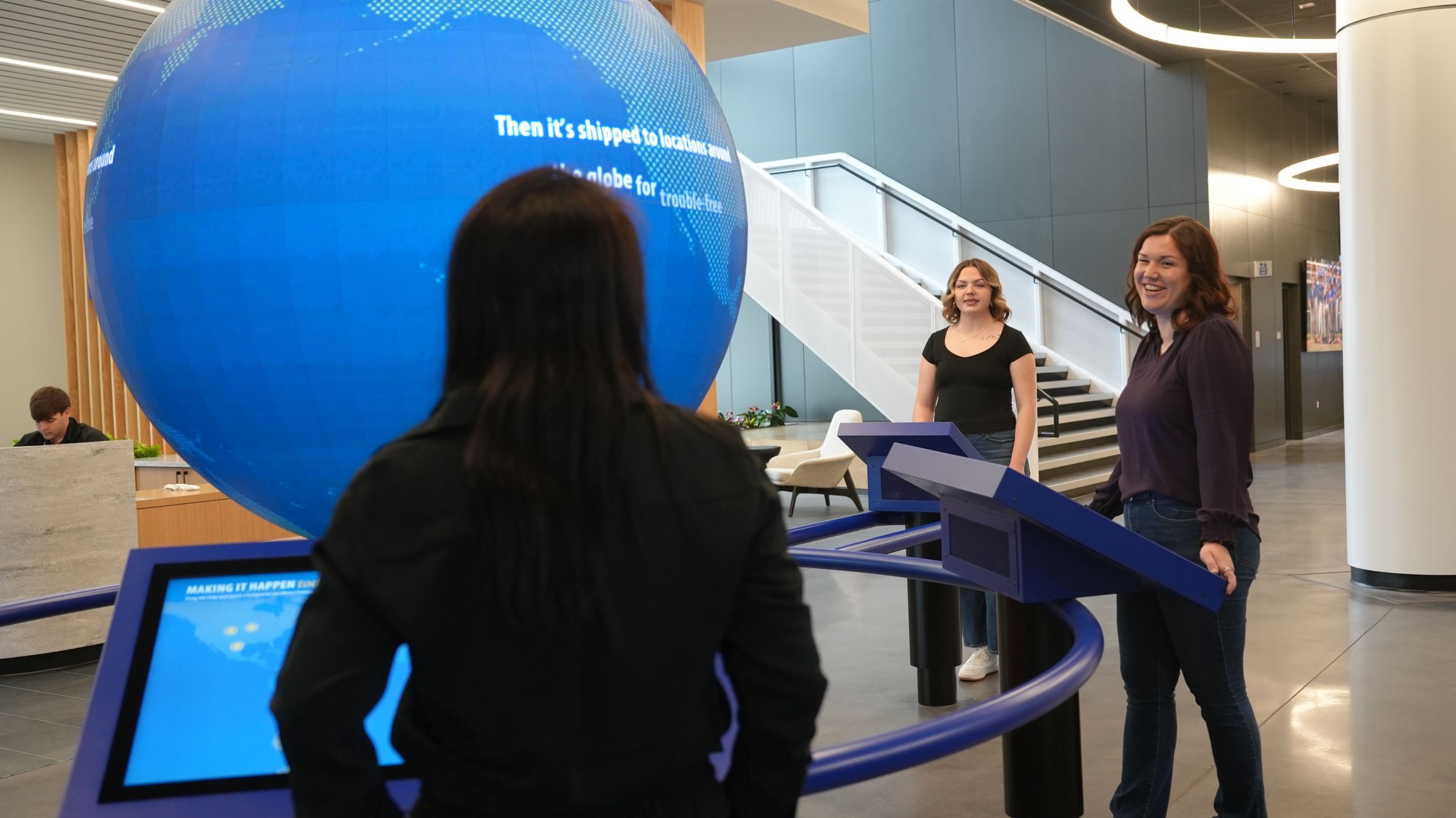
The most complex challenge was the presentation space, which needed to shift between formal client presentations and everyday operations while keeping Musco's signature technology at the center of the story.
Musco Lighting has spent decades defining how the world watches sports. The company helped bring night football to broadcast audiences in the 1970s and has since lit venues such as Wrigley Field. Its products are engineered for scale, precision and reliability.
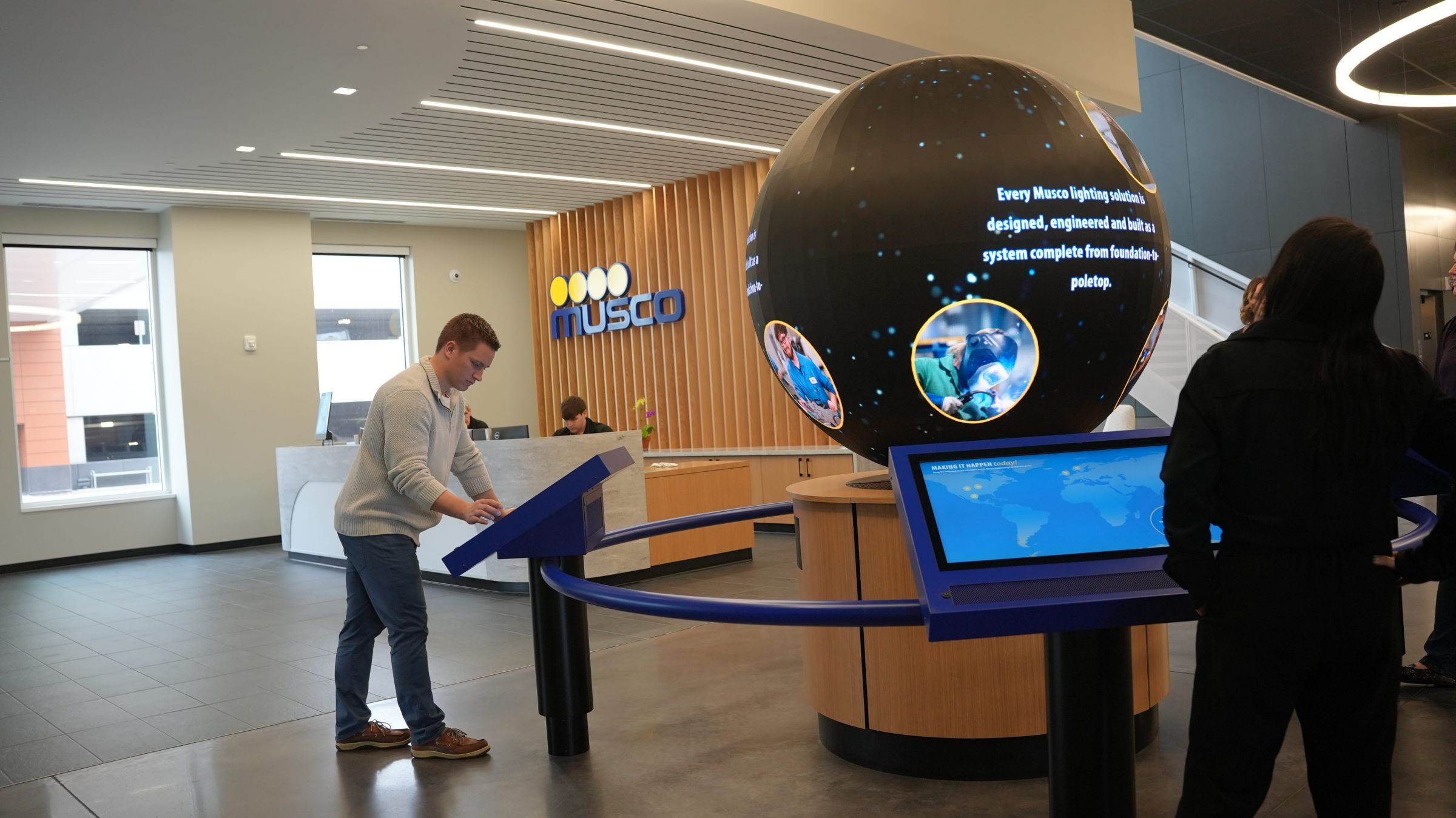
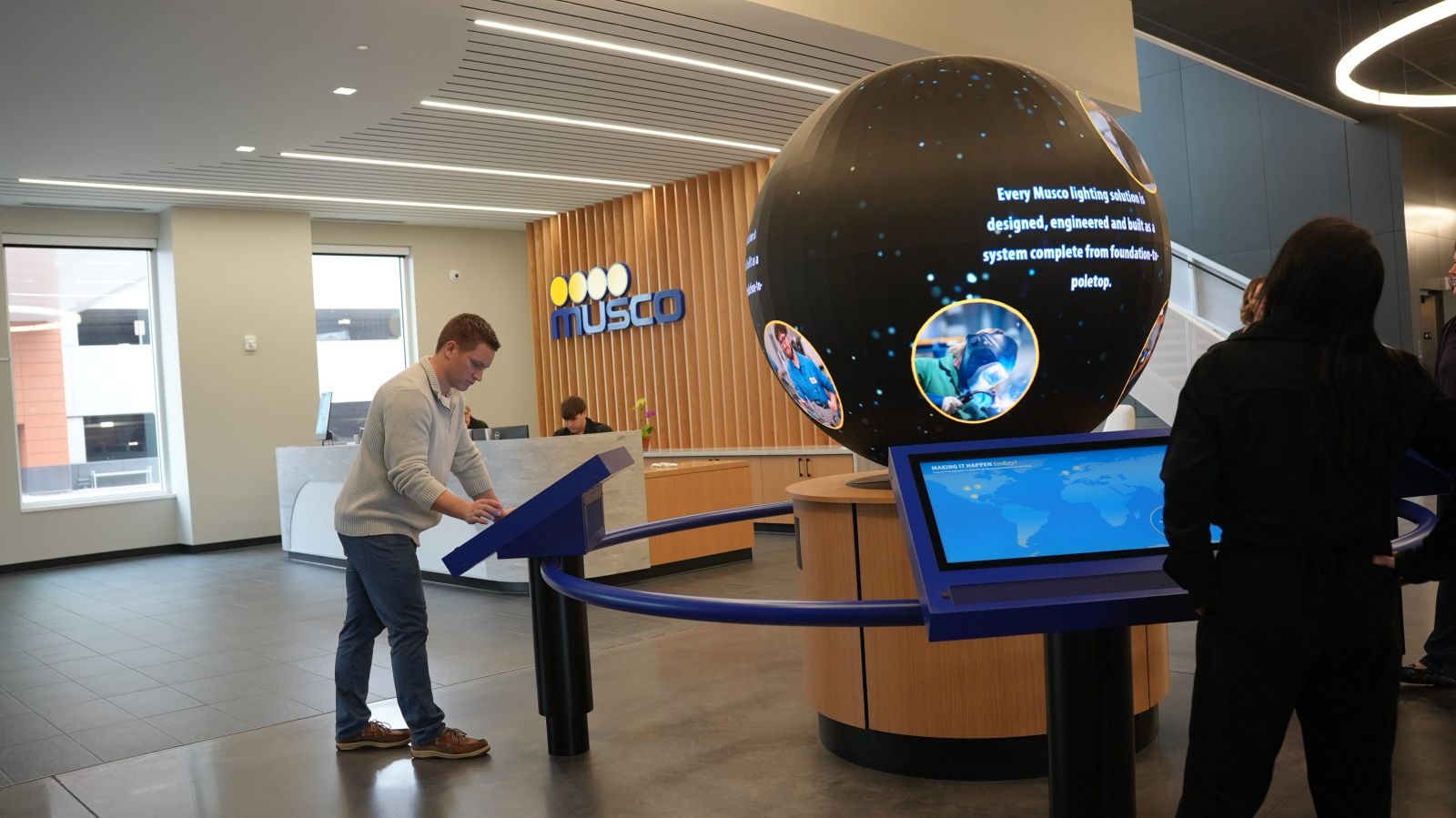
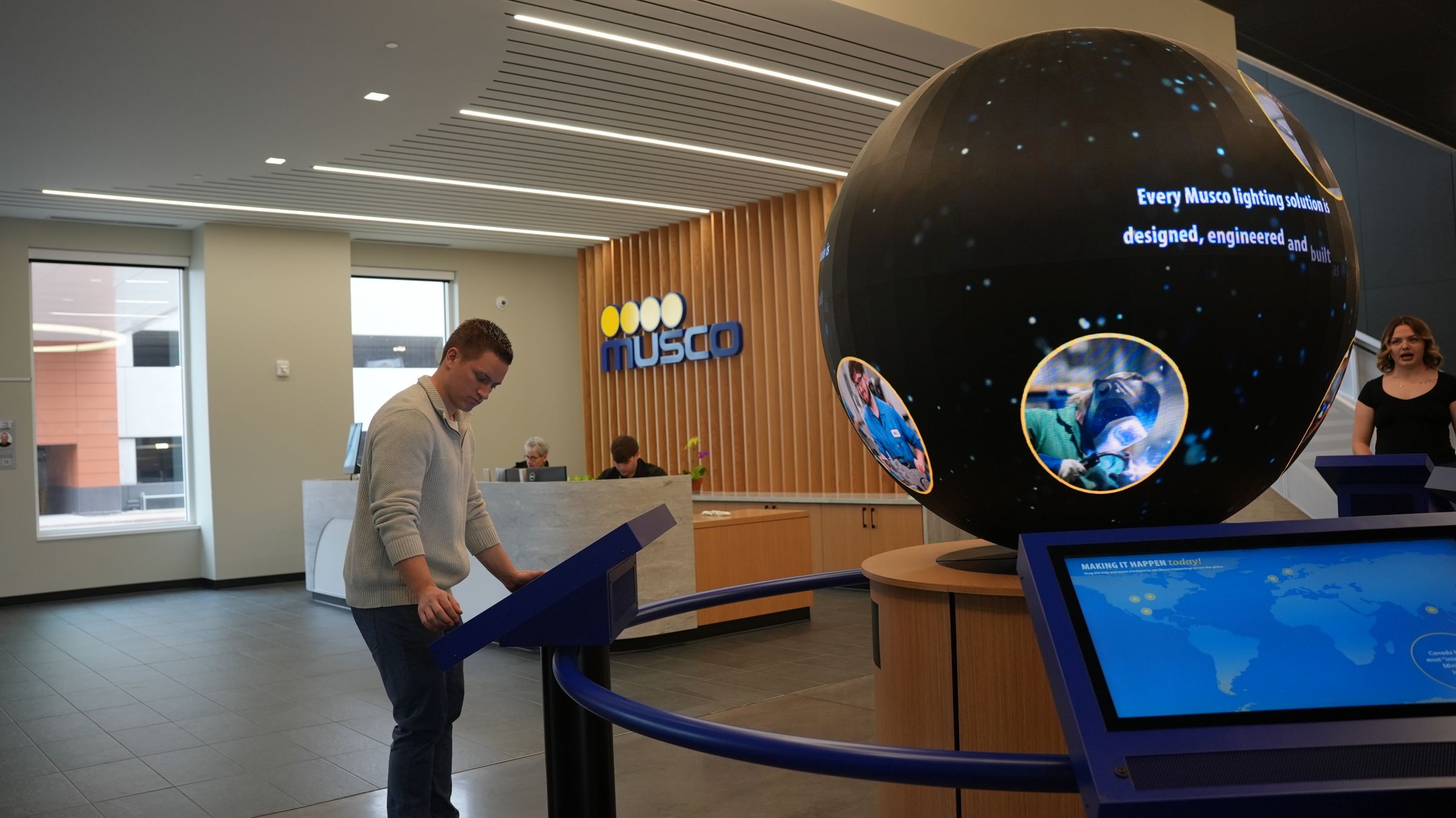
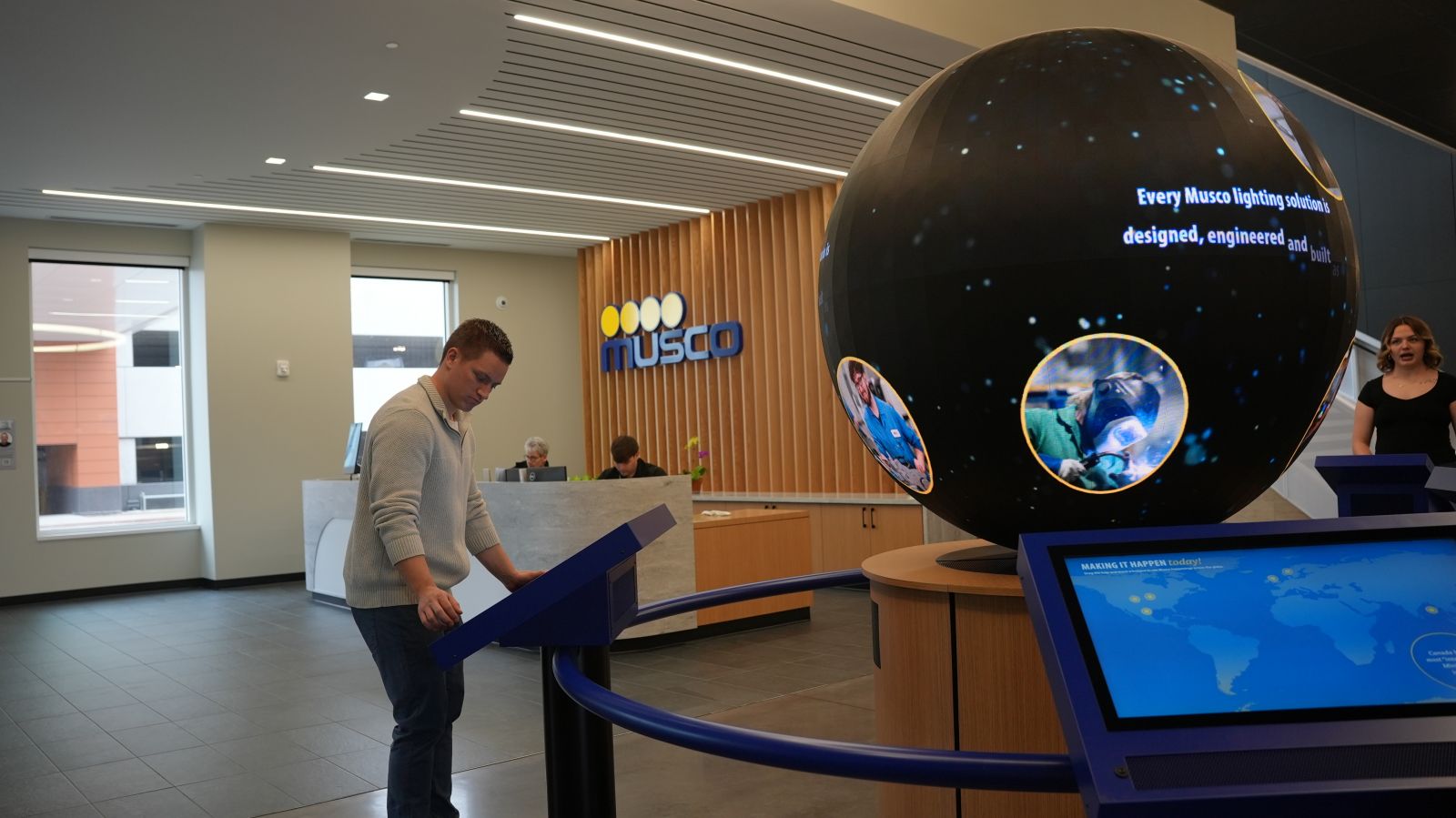
When Musco set out to build a corporate experience center in Muscatine, Iowa as a space designed to educate clients, distribution partners and visitors about the company's history, culture and products, they faced a problem their own expertise couldn't solve. Musco knows light. But they don't design museum exhibits. Luci Creative was engaged as exhibit designer and brought Morlights in to handle lighting design, creating a team fluent in both disciplines.
Creative + Technical: The Morlights Approach
The project covered four distinct areas: graphic-driven entry corridors, an artifact corridor connecting two buildings, a main museum space tracing the company's history and a 40-foot-tall presentation space built around a live baseball lighting demonstration. Each space had its own requirements. Together, they had to read as one coherent experience. The most complex challenge was the presentation space, which needed to shift between formal client presentations and everyday operations while keeping Musco's signature technology at the center of the story.
Creative Strategy: Lighting a Company That Knows Light
Earning Credibility With the Client
Musco is not a passive audience. They are one of the foremost authorities on lighting in the world. Designing for them meant operating at a level of precision and intentionality that would hold up to expert scrutiny. Every decision had to be defensible to the exhibit designer and AV team, and to a client that has spent decades holding others to the highest technical standards. Morlights approached the project accordingly.
Distinct Areas, One Experience
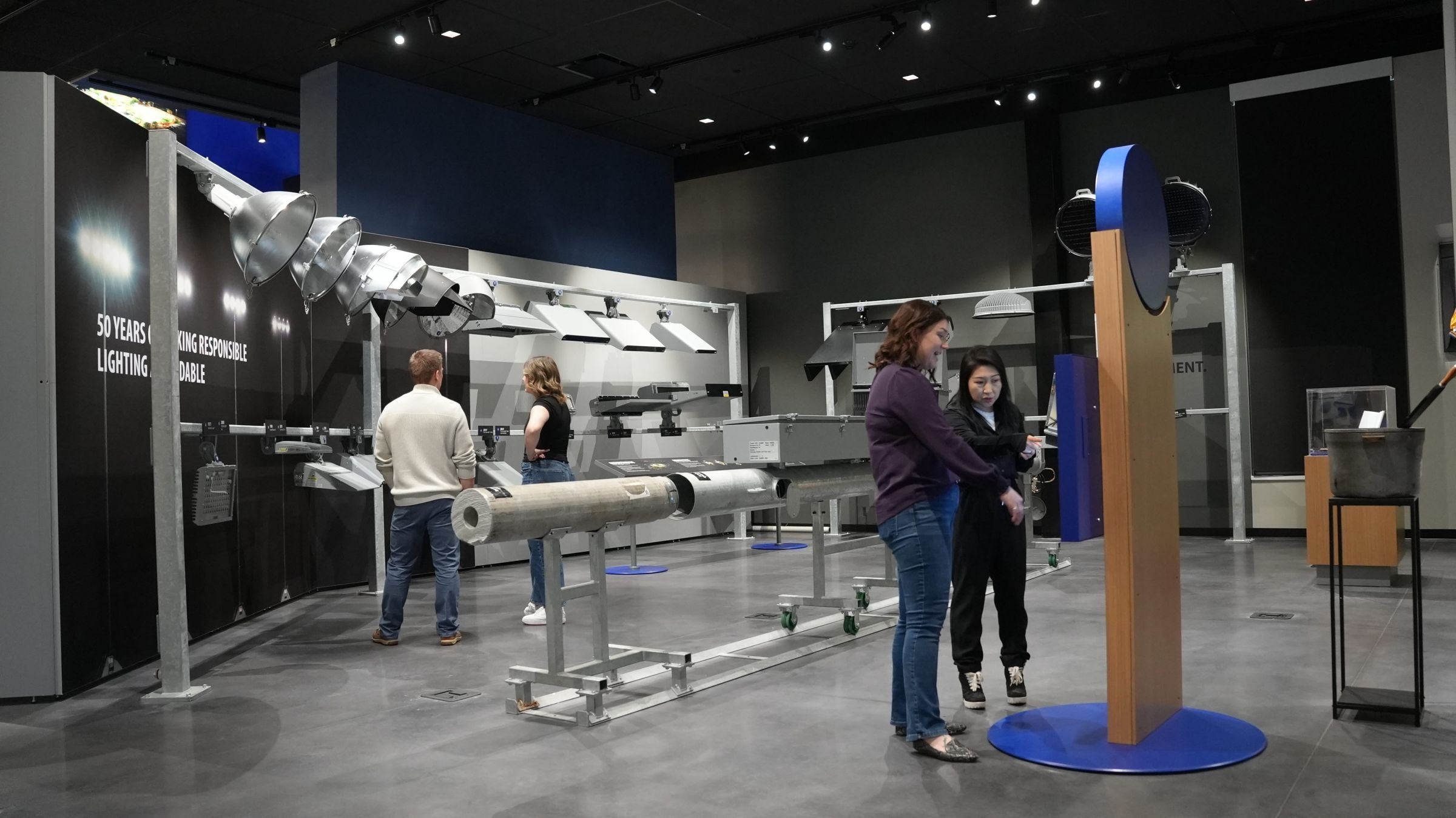
The entry corridors established the brand register and prepared visitors for what was ahead. The artifact corridor, connecting two separate buildings, required continuity across a threshold that could have fractured the experience. The main museum space called for quiet, focused illumination that kept the historical material readable without imposing an atmosphere where it didn't belong. Across all three, the goal was the same: let the content lead and keep the lighting invisible.
The Presentation Space
The fourth area was the project's centerpiece and its most demanding design problem. A 25-foot-wide, 40-foot-tall space built around a backlit night sky graphic and Wrigley Field bleachers, the room had to function as both a working museum space and a live performance environment. Morlights developed a dynamic lighting approach that gave the room two complete identities: ambient and performance. The shift between them needed to feel seamless and be operable by Musco's own team without specialized support.
Technical Strategy: Behind the Experience
Designing for Client Autonomy
Musco's primary operational requirement was self-sufficiency. The lighting system needed to be owned and maintained by their team without requiring an outside specialist for adjustments, troubleshooting or resets. Morlights responded with a control strategy built around that constraint. The museum spaces were designed using relay-based systems to be straightforward, reliable and minimal in their training demands.
Long Throw, Close Read
The 40-foot ceiling in the presentation space required hardware built for long throw distances, the kind of specialized equipment more common in sports lighting applications than museum environments. That alignment was not accidental. Morlights specified fixtures capable of delivering the precision the space required at the distances involved, while keeping the overall system within a framework Musco's team could service themselves. The result is a room that performs at the level of a professional demonstration environment and operates with the simplicity of a well-designed switch.
Design Outcomes
Conclusion
The Musco experience center is a particular kind of design challenge: the client is an expert. Designing lighting for a company that has spent decades perfecting light for the world's most visible venues means working without the usual margin for approximation. Morlights brought the same standard of rigor to Musco's story that Musco brings to every stadium they light. The project reflects the Morlights conviction that the best lighting doesn't announce itself but makes seeing impossible to look away from.
Luci Creative