
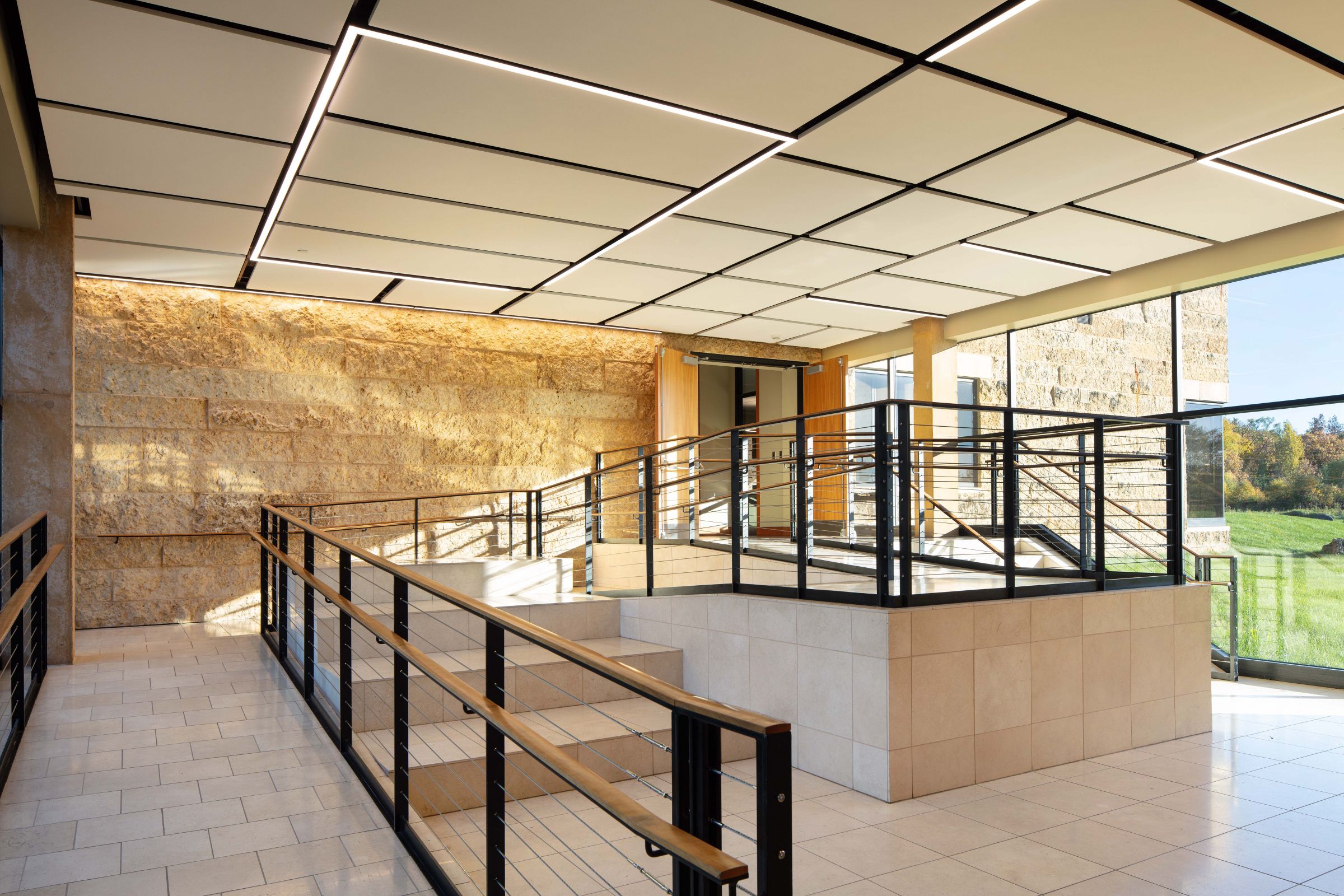
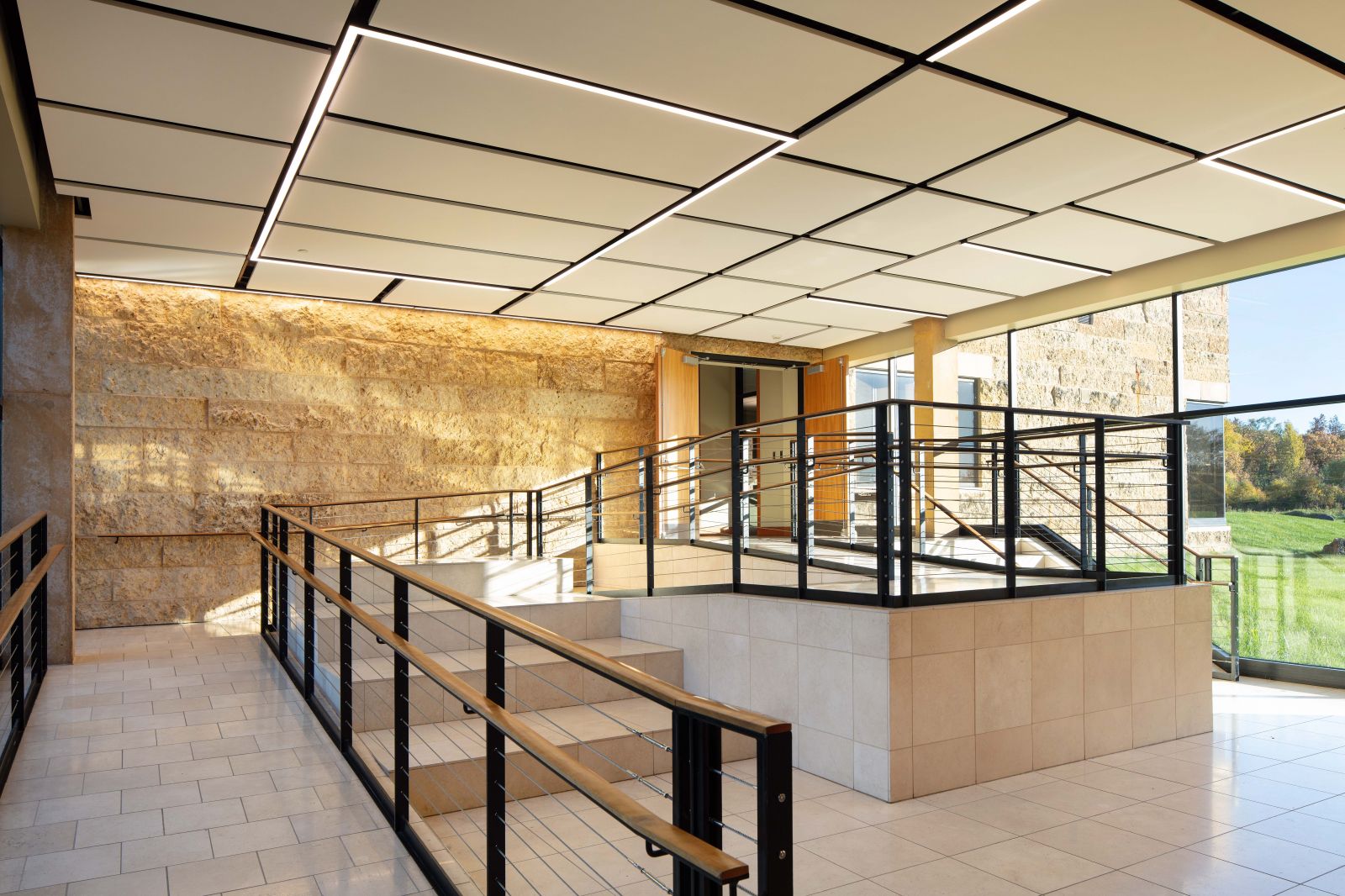
The bridge on the upper level of “Feast” has downlight integrated into the linear fixture to provide more direct light in the path.

The bridge on the upper level of “Feast” has downlight integrated into the linear fixture to provide more direct light in the path.
Indigenous culture is at the heart of Indian Community School in Franklin, Wisconsin. Designed by studio:indigenous, the 150,000-sq-ft school serving grades K4-8 merges cultural values with education by bringing the surrounding natural environment into the striking interior learning spaces and gathering centers. Woven along a wooded hillside, the building is made of wood, copper, and limestone, with large windows offering expansive views of the local landscape. Inside, the use of natural materials—additional wood, marble, and glass—reinforces the connection with the outdoors, while migratory paths throughout support flow in a space created to foster community.
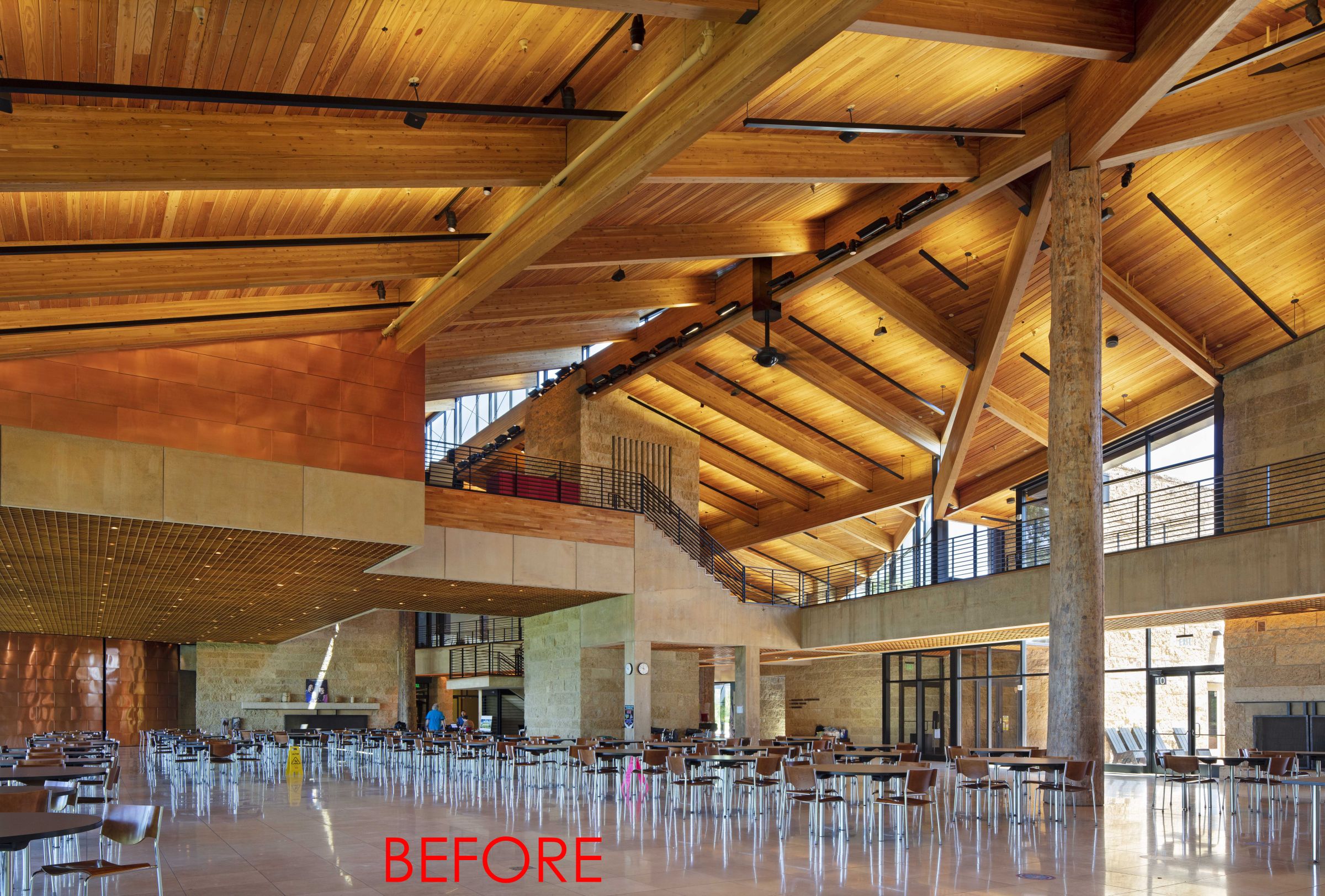
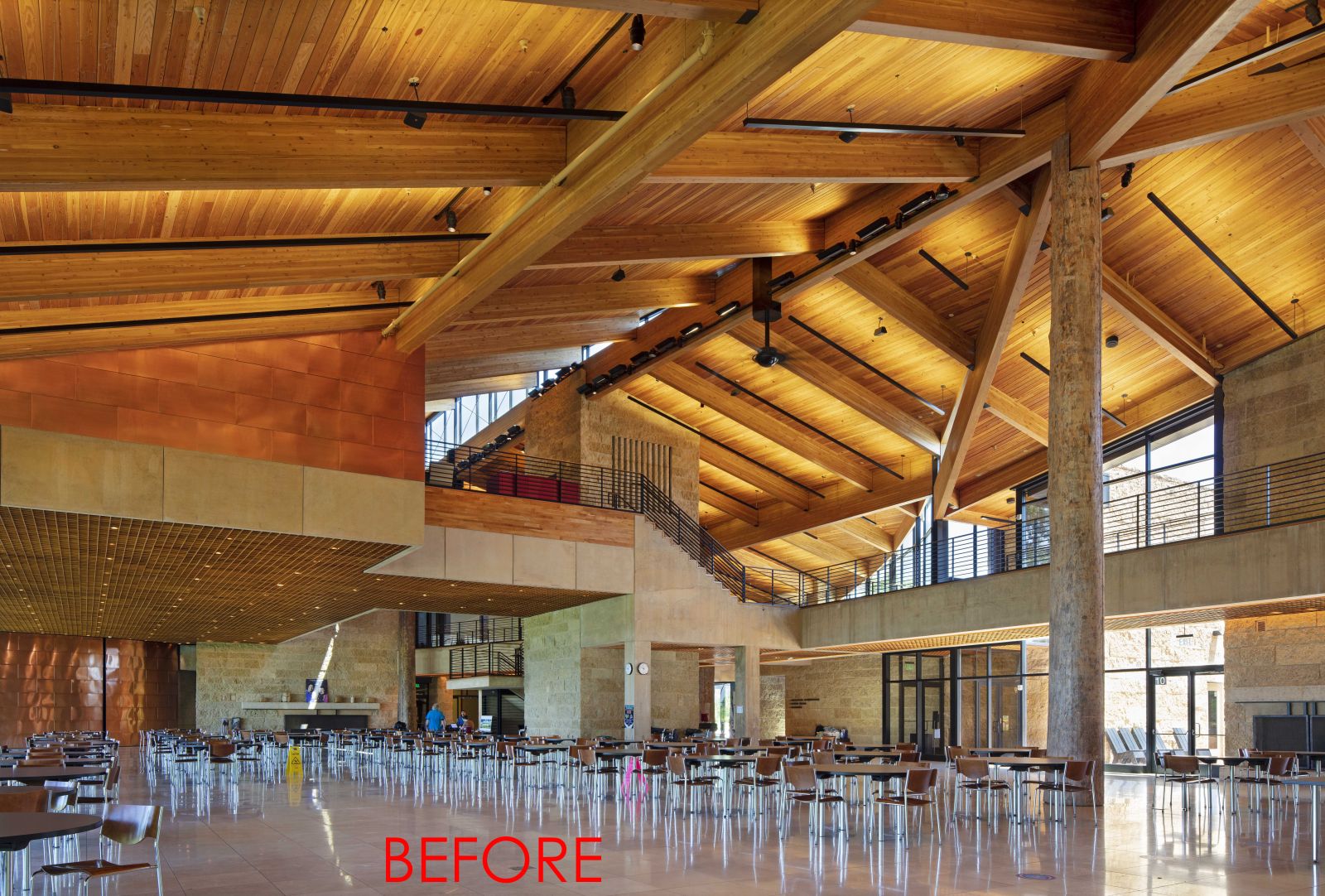
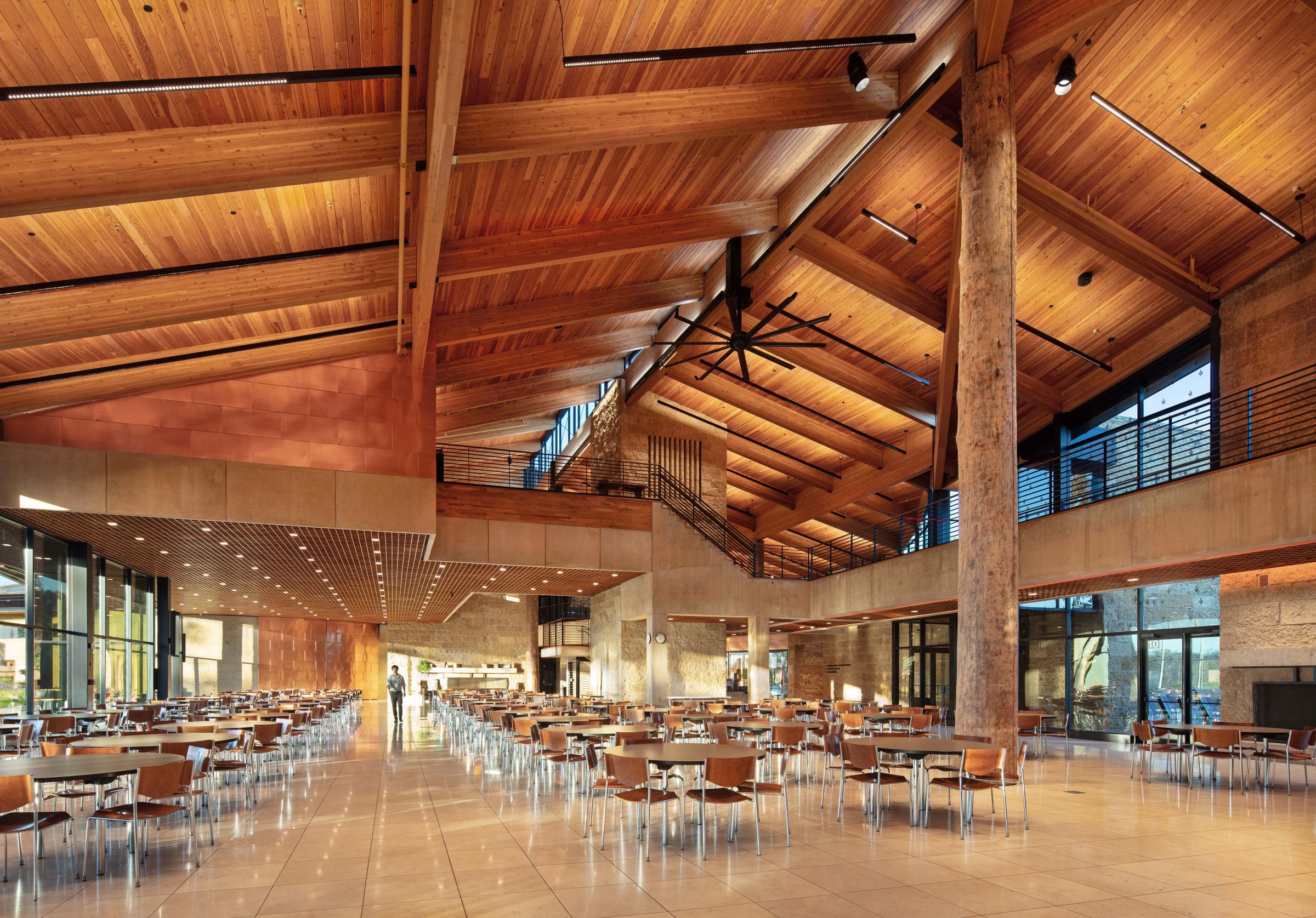
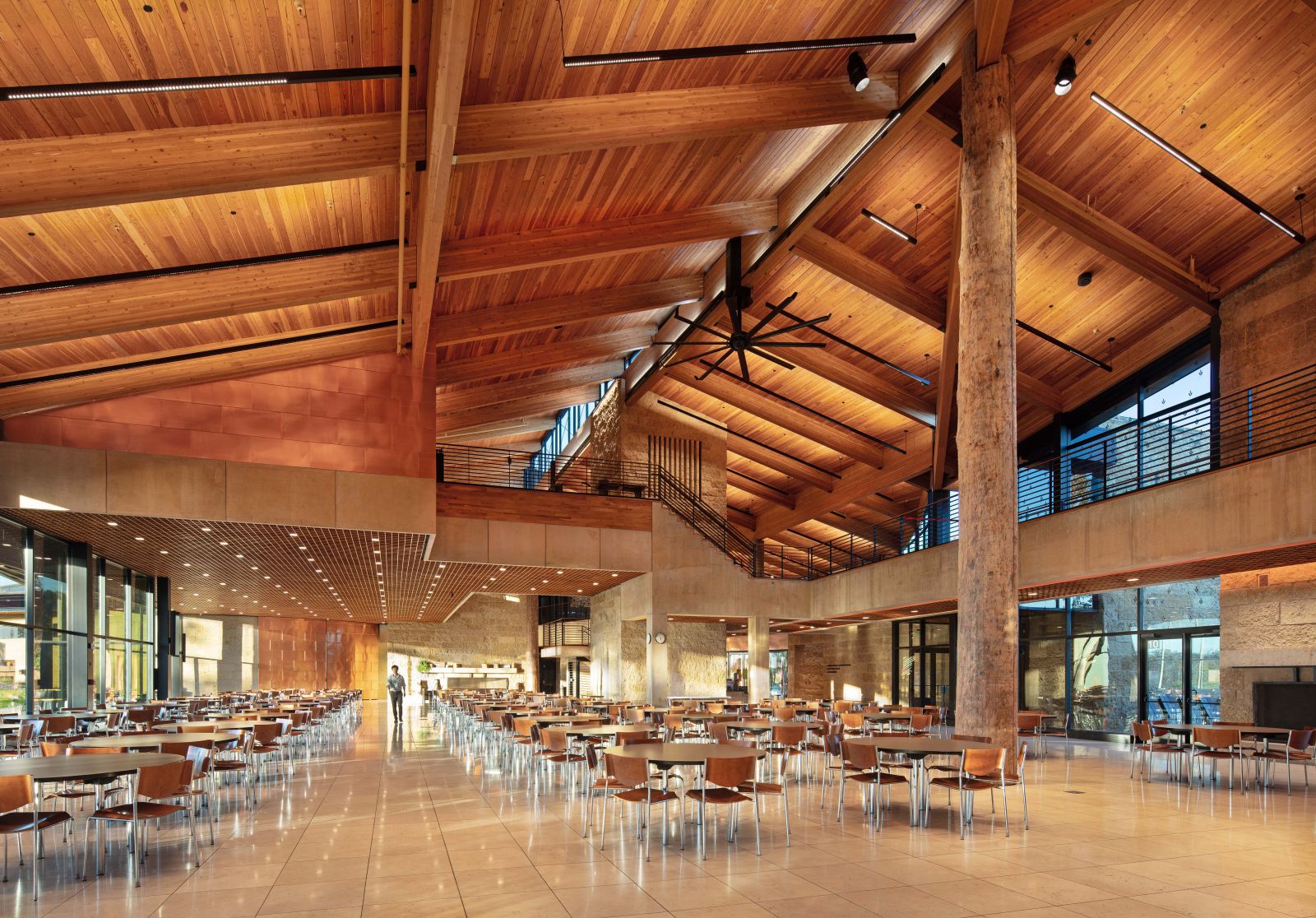
The school’s original lighting, circa 2007, not only failed to showcase its award-winning architectural design, but also failed to serve the teachers and students that use the building every day. The school’s upgraded lighting system, completed in 2023, highlights the building’s original architectural concepts and provides adequate functional illumination in classrooms and common areas, enhancing visual comfort and productivity, as well as safety and security, inside and out.
Color tuning and dimming are essential to the new design, beginning in the lunchroom and main gathering space, where square downlights create a continuous glowing square that maintains the integrity of the architecture, and up/down linear fixtures enhance the appearance of a wooden slat ceiling. Linear fixtures containing different optics place more illumination onto the marble floor and copper overhang to render their colors in true form.
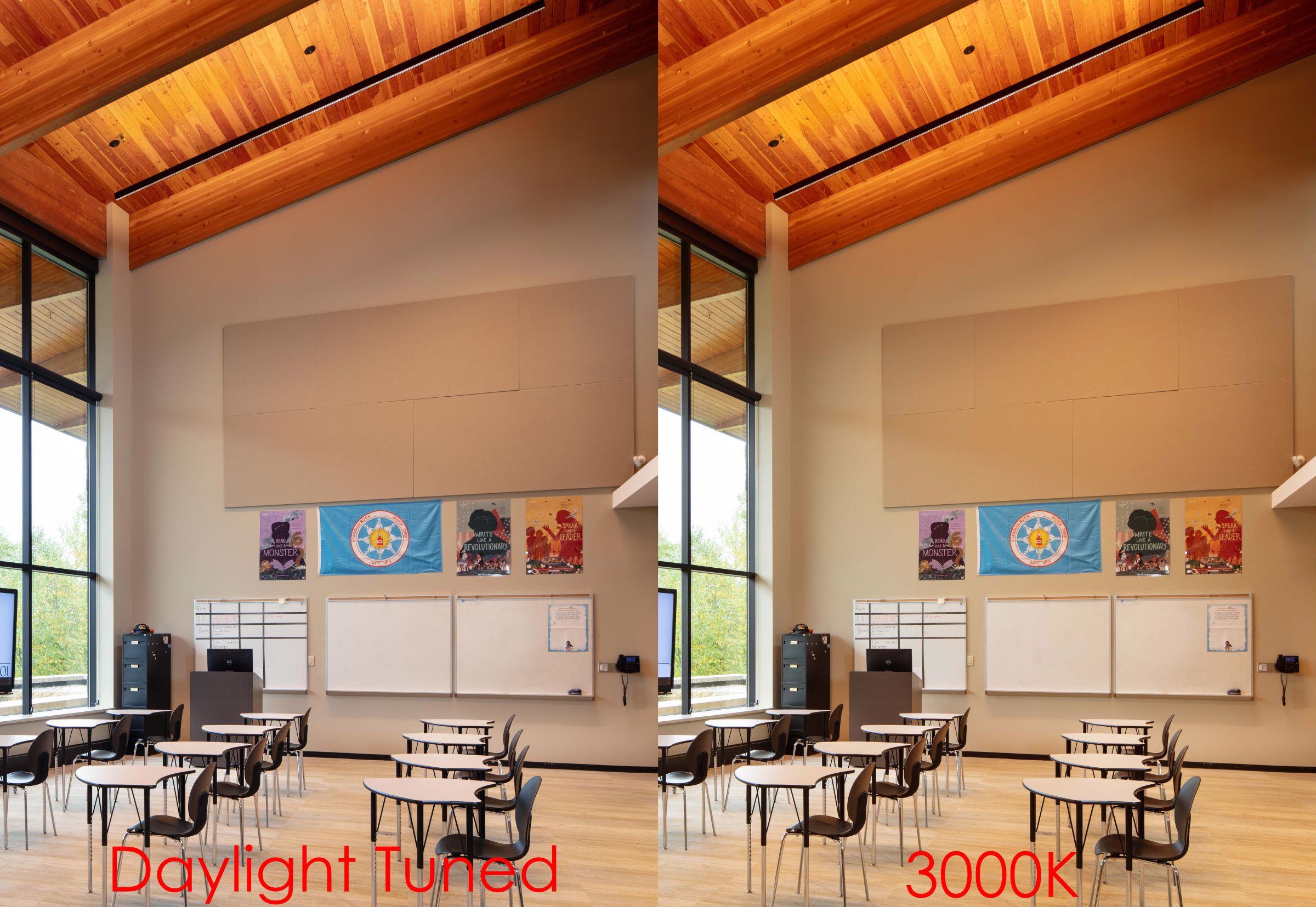
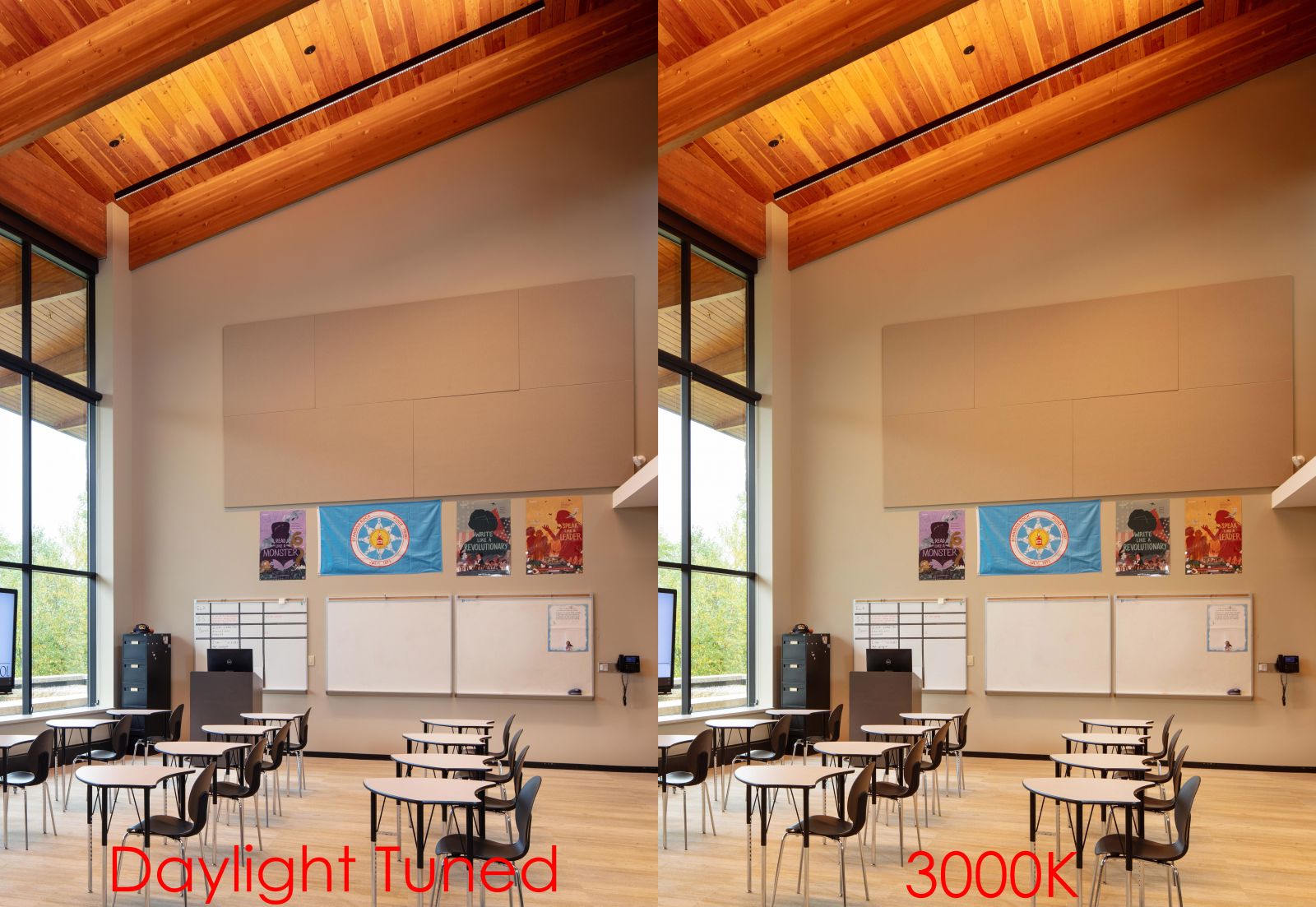
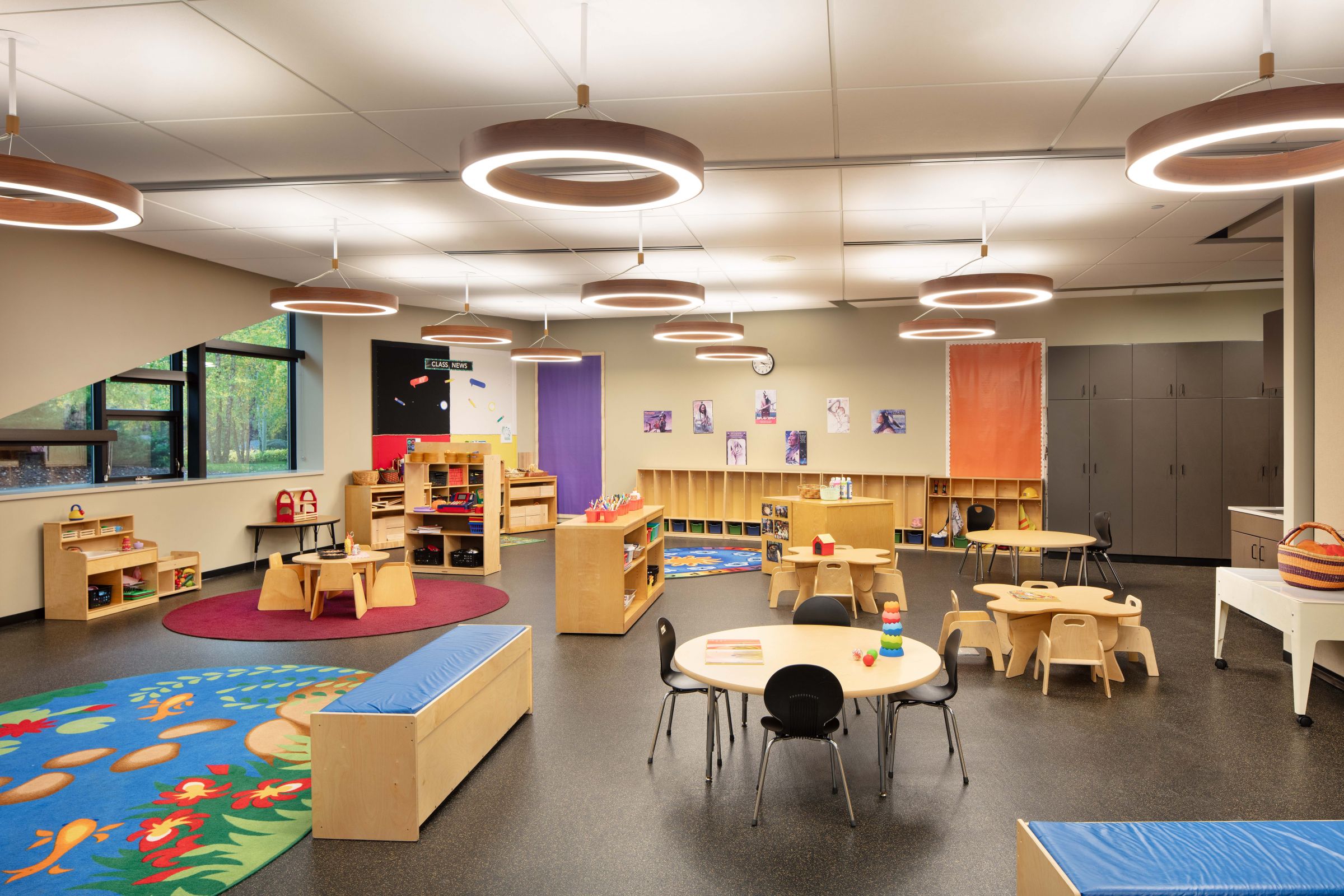
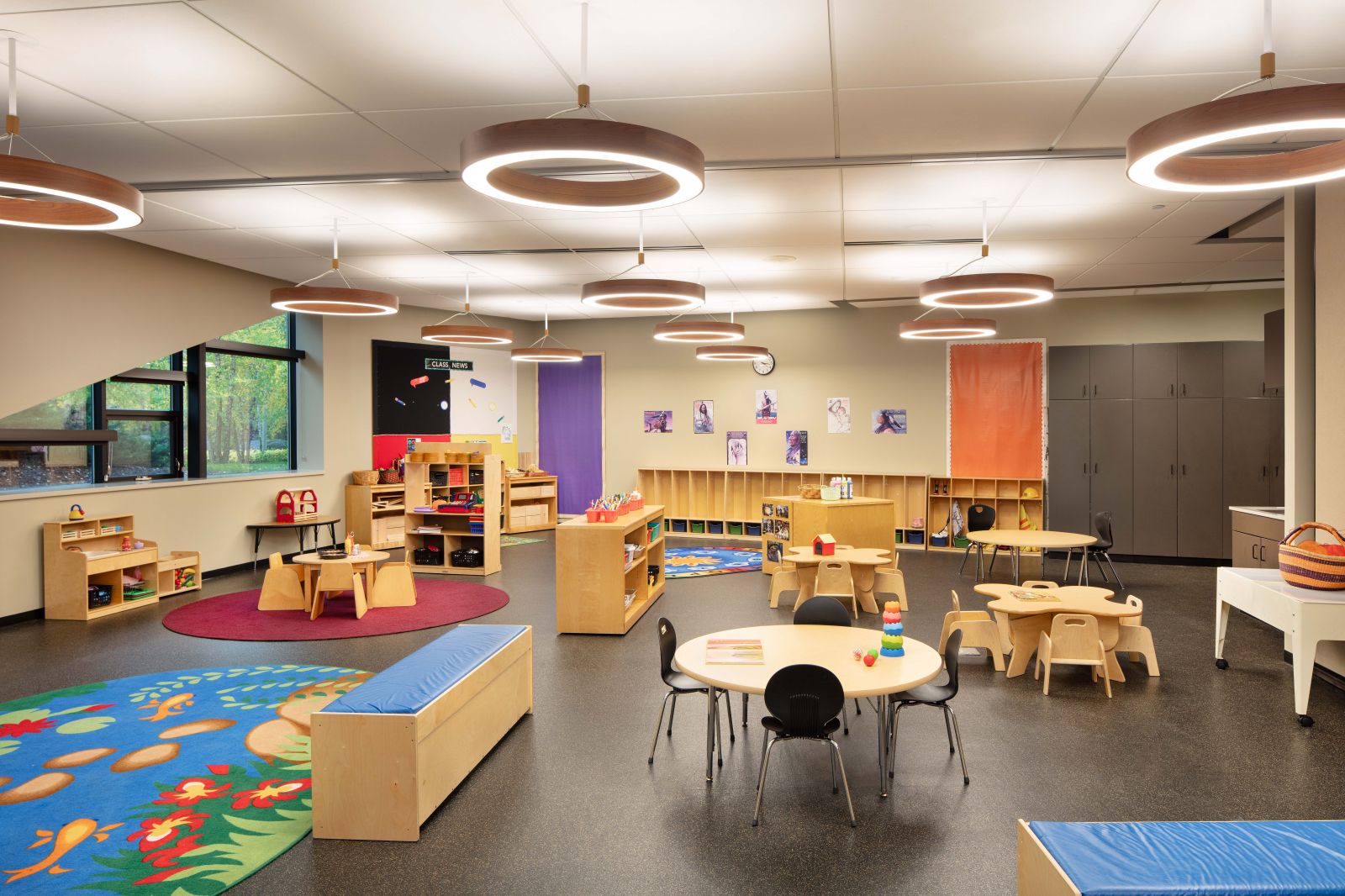
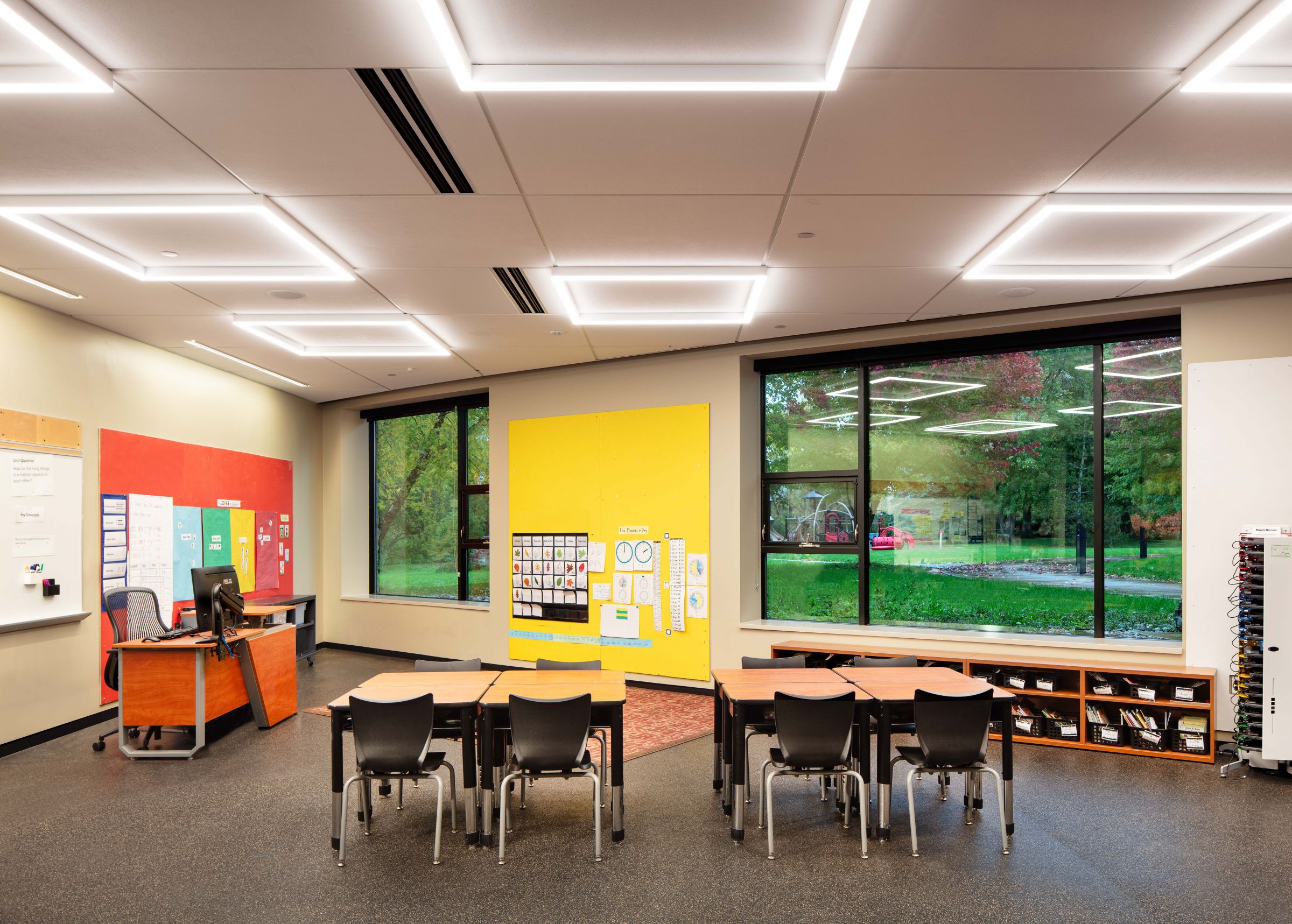
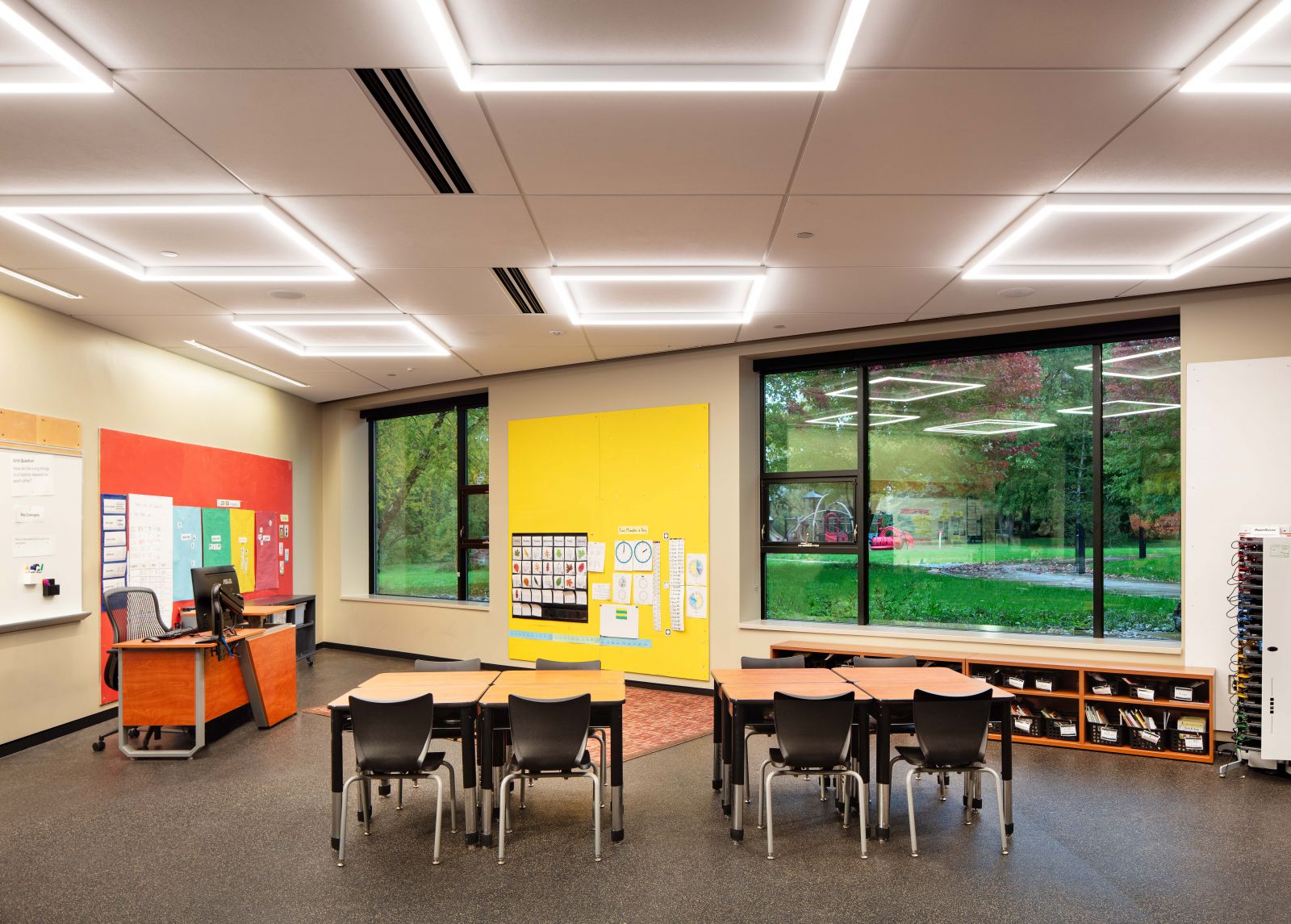
In classrooms, indirect/direct luminaires—with color tuning, 0.1% dimming, daylight and vacancy sensing—ensure functional illumination at the desktops and on teaching displays, with adjustments during the day reflecting the exterior environment. Each fixture is individually addressable, and presets can be modified by staff so the lighting best suits a particular classroom or teacher’s needs. In addition to paying homage to the original architecture, classroom illumination now creates a sense of place within each unique learning environment.
The design culminates in a central communal gathering area replete with native plantings, wooden artifacts on display, and water representing the Mississippi River flowing through a symbolic copper fountain. Original track heads, which provided very little illumination, were extended and additional track segments were added, pushing light onto key objects and properly highlighting the multipurpose space.
The team turned to a wireless DALI solution for controls, as the building’s existing conduit and wire was inaccessible, and exposed conduit and wire was not an option. The DALI system allows the lighting in each space to be tuned and adjusted according to usage and time of day. Presets are triggered based on input from interior daylight and occupancy sensors, as well as a sensor located on the roof that tracks the quantity and color temperature of daylight reaching the building throughout the day. The system’s extreme flexibility and ease of maintenance sets an example for educational institutions and cultural gathering spaces alike, while honoring the architect’s original vision and serving the entire community—for any purpose, at all times of day, amid all seasons of the year.
George Lambros Photography